Pages

Showing posts with label chinese. Show all posts

Sunday, 29 January 2017

mango sago dessert + a hint of pineapple, a drizzle of maple

Mango and pineapple blended with coconut milk, with large tapioca pearls and maple syrup.

Happy New Year / Happy Chinese New Year, everyone!

Last year, I made a couple of simple goals for myself - grow and harvest my own vegetables, try some recipes from cookbooks that were gathering dust - and I'm happy to say that I succeeded on both counts. I also managed to complete a whirlwind of very belated Thailand travel posts, and I'm very pleased that I finally got them done!

Aside from these small achievements, I think, for me, 2016 was about becoming content with life again. As for 2017? I'm not sure, but I think it's about brewing change. Simon and I are looking into the possibility of buying a cute little apartment in Melbourne. We'll see what happens. It's okay if it takes longer than expected, or if plans change. Something that is for sure, though - I really, really need to get my way overdue Taiwan travel posts done. That's going to be my goal this year, hold me to it!

In the meantime, here's a maple pineapple mango sago pudding for you. I've always liked to order the little Hong-Kong-style mango sago desserts for yum cha in Australia, and this is my slightly different version of it. I used bigger tapioca pearls for extra chewiness, threw in a refreshing touch of pineapple, and added depth with the sweet complexity of maple syrup. Delicious!

Pineapple-mango sago pudding, sweetened with maple syrup.

maple pineapple mango sago pudding
(serves 4)

1/2 cup sago or tapioca pearls
2 cups mango (plus extra to stir through and garnish)
1/2 cup pineapple
1/3 cup coconut cream
1 cup water
pinch of salt
maple syrup, to taste (may substitute with palm sugar syrup or brown sugar syrup)

Bring 12 cups of water to boil in a large pot, add sago or tapioca pearls. Let it cook, partially covered, stirring from time to time, and adding more water if required, until the pearls are mostly translucent except for the tiniest speck. Turn off the heat, cover the pot, and let it sit until the pearls are completely translucent.
Drain off the cooking liquid, and thoroughly rinse the sago with cold water - I recommend using a fine sieve. Set aside.
Blend mango, pineapple, coconut cream, water and salt. Combine this mixture with the sago pearls and some additional small diced mango pieces.
If you use frozen fruit, you can serve this straightaway. Otherwise, let it chill in the fridge for a few hours.
Serve cold in individual bowls. Garnish with more mango pieces and add maple syrup to taste.

Note: If you have coconut milk instead of coconut cream, use 2/3 cup coconut milk and 2/3 cup water at the blending stage.

Click here to read the rest of the post!

Sunday, 17 January 2016

sweet mung bean dessert soup

Mung bean dessert soup with sweet potatoes.

I have recently started working at a restaurant - hurrah for free food! - but this also means that it reduces the likelihood that I spend time and effort on preparing my own meals. I do still love cooking, however, so I try to make the most of it when I have some spare time.

Simon is fairly ambivalent about Asian-style dessert soups - but I grew up with them and they are my comfort food. So when I had a day off, recently, I made a nice batch of mung bean soup with sweet potatoes and a gentle hint of ginger to satisfy my cravings. This soup is wonderfully simple, and it can be enjoyed hot or cold. I like it any time of the day - for breakfast, as a snack in between meals, or as a dessert. As far as sweet things go, this one is reasonably wholesome, so give it a go and let me know what you think!

mung bean dessert soup (with sweet potatoes and a touch of ginger)
(serves 4)

1 cup dried mung beans (also referred to as "green beans" in Chinese)
225g / 1/2 pound sweet potato, peeled and cut into bite-sized pieces
3cm / 1 inch ginger, peeled and roughly sliced
60g / 1/4 cup light palm sugar / brown sugar / raw sugar / Chinese yellow rock sugar

Soak the mung beans for about 2 hours.
Drain off the water, rinse the beans well, and place them in a saucepan with 4 cups of water, along with sweet potato chunks and ginger slices.
Bring the water to boil, and then reduce the heat to low. Let the mixture simmer, partially covered, for about 15 minutes.
Stir in sugar, and continue to cook the dessert soup for another 10 minutes or until the sugar completely dissolves and the texture of the beans and sweet potatoes are to your liking. Discard the ginger.
Serve your green bean soup warm, or allow it to cool down before covering it, chilling it in the fridge, and having it cold - it's delicious either way!

Note:
This dessert soup continues to thicken after cooking, and becomes almost porridge-like. If anything, this makes it more delightful!
Also, it should keep well in the fridge for 3 days or so.

Asian-style green bean dessert soup with sweet potatoes and a hint of ginger.

Click here to read the rest of the post!

Tuesday, 22 September 2015

penang eats: some of my favourites!

Chinese fried breads for breakfast! Yeah!

For me, a trip back to Malaysia would not feel complete without a visit to Penang. My parents are originally from mainland Penang, and most of our relatives still reside there. I used to spend many childhood holidays in Penang, playing with my cousins, and I have many happy memories associated with this part of Malaysia. And, let's face it. The food. You've got to go to Penang for the food, if nothing else.

So after driving up the east coast of Peninsula Malaysia, it only makes sense that our road trip then takes a turn to the west coast. We spent about a week in Penang, and we pretty much just ate... and ate... and ate. I don't remember how many times I had asam laksa in Penang. I could eat that stuff everyday, and I think I did for that week. Good times. Amazing times.

Here's a sample of what we had the evening we arrived in Penang.

Char koay teow, smoky wok-fried flat rice noodles with bean sprouts, egg and shrimp.

Char koay teow - wok-fried flat rice noodles.

Wantan mee, thin egg noodles with petite dumplings and barbecued pork slices. You can get the "soup" version, which comes in a bowl with a generous amount of light broth. This is the "dry" version, which isn't really that dry, as you can see - you get a small amount of rich dark soy sauce broth, and it is excellent.

Wantan mee, the "dry" version.

Char hor fun, thick flat rice noodles in an egg gravy.

Char hor fun, also known as wat dan hor.

In the mornings, we like to have steamed Teochew-style vegetable dumplings for breakfast. These dumplings have a homely rotund appearance and thin, tender, translucent skins. Don't expect them to be vegetarian, though - while it is mostly vegetable, they typically also contain dried shrimp in the filling. The green ones, which we call "gu chai kueh", are the ones with chopped garlic chives...

Gu chai kueh - steamed garlic chive dumplings.

While the yellow ones, which we call "mangkuang kueh", are filled with the goodness of shredded jicama, a turnip-like root vegetable.

Mang kuang kueh - steamed jicama dumplings.

Other than fried koay teow, you can also get koay teow t'ng, in which the flat rice noodles are boiled and served in a light and savoury broth, with accompaniments such as fish balls and pork.

Koay teow t'ng - flat rice noodles in a clear broth.

As I've mentioned, I ate asam laksa as often as I could. I believe there were days when I had it for lunch AND dinner. This dish features lovely round rice noodles in a broth of tamarind and shredded Indian mackerel (we call this fish "kembung") with bits of onion, chilli, lettuce, cucumber and mint. The intriguing kick of pink torch ginger flower (bunga kantan) tops it all off with panache. According to my parents, the torch ginger flower is a bit scarce these days, and not all vendors include much of it, if any. Here, we received a very nice sprinkling. It probably helps that my parents are on friendly terms with the stall owner!

Penang assam laksa.

You can get sea coconut beverage most places in Malaysia if you know where to look (hint: night markets), and to be honest this particular one I had in Penang probably wasn't the best example of it, but it was still nice and thirst-quenching. And sea coconut is always awesome - it has a gentle flavour and a chewy, crunchy texture that I find very appealing.

Sea coconut drink.

Last but not least, dessert. Throw some green jelly noodles and red beans into a cold coconut soup sweetened with palm sugar, and you have this lovely concoction called "cendol".

Cendol dessert.

And... yeah, in case you were wondering, writing this post is making me miss Malaysian food in a big way. I might have to go back again next year!

Click here to read the rest of the post!

Tuesday, 8 September 2015

road trip lunch stop: sun kong restaurant, lenggong (homemade fish balls, fiddlehead ferns and more!)

Sun Kong Restaurant at Lenggong town in Malaysia.

Ummmmm, picking up where I left off last year in this long-overdue continuation of my Asia travel series. As some of you may know, I quit my job in Melbourne last year, moved all my belongings to Perth, travelled around Asia for several months, and eventually settled back in Perth.

There are so many things to share, and last year's travel posts were only the tip of the iceberg. We were in Malaysia, Myanmar, Thailand and Taiwan, and I'm not even done posting about Malaysia yet! So here we continue on with our Malaysia road trip.

After leaving Kelantan, we drove to Penang, but on the way, we stopped at Sun Kong Restaurant (S-2, Kampung Baru Ayer Kala, 33420 Lenggong, Perak) for lunch.

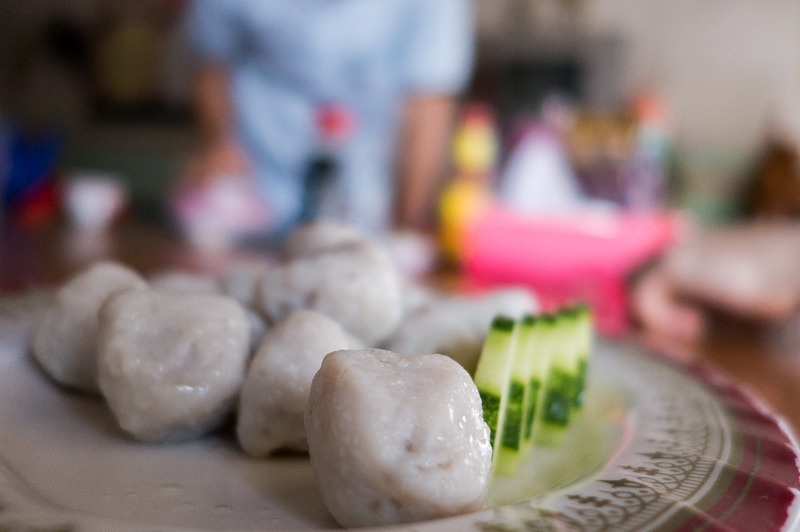
Sun Kong is known for their homemade fish balls, so we had that as an appetizer. These handmade wolf-herring fish balls are distinctly different to the usual filler-added and MSG-laden stuff you get in sealed packets at the shops. Their gentle savoury flavour and rustic texture had me going back for seconds.

Homemade wolf-herring fishballs.

After devouring all the fish balls, we turned our attention to our rice and main dishes. First up, this vibrantly green fiddlehead fern stir-fry dish. These fiddlehead greens (also known as paku in Malaysia) are treated with a touch of garlic and other seasonings, and they straddled the perfect textural balance of firm and tender.

Stir-fried fiddlehead ferns.

Then we enjoyed slices of pig stomach and assorted vegetables in a tangy pineapple sauce. Definitely not the typical sweet-and-sour dish you see in Westernized restaurants!

Sweet and sour pig stomach with vegetables in pineapple sauce.

We have been eating a lot of fish during our time in Malaysia, and we weren't about to stop. Local wild river-caught fish is a favourite when we can get it, and when it's artfully steamed in the classic manner, the freshness really shines.

Steamed catfish (pak sou gong) with soy sauce, sesame oil, ginger, coriander, spring onions.

With full bellies, we hopped back into the car and resumed driving. Later that evening, we arrive in Penang, which is basically a food haven in so many ways. But that's a subject for the next post. Stay tuned!

Click here to read the rest of the post!

Sunday, 9 August 2015

sweet red bean soup

Sweet red bean soup, a simple Asian dessert.

Just a short and sweet one today! This is an easy red bean soup dessert that I've enjoyed since I was a child. Keep it simple using just red beans, sugar and water, or add an extra dimension with a piece of citrus peel or a knotted pandan leaf. This is very much the kind of recipe that you adjust to suit your taste, so don't be afraid to go with the flow.

sweet red bean soup / adzuki bean dessert soup
(serves 4)


1 cup red beans / adzuki beans
1 piece of fresh mandarin peel or dried tangerine peel (optional)
1/4 cup Chinese yellow rock sugar / raw sugar / light brown sugar
1 pinch of salt (optional)

Soak the red beans overnight with just enough water to completely immerse them.
The next day, drain off the water, rinse the beans well, and place them in a saucepan with 5 cups of water.
Bring the water to boil, and then reduce the heat to low. Add the mandarin peel or tangerine peel, if using. Let the beans simmer, partially covered, for about 40 minutes or until the beans are tender.
Remove citrus peel, and add the sugar and salt. Continue to cook the beans for another 20 minutes or until the texture of the beans is to your liking, adding more water if necessary. If you like, you can also mash or blend a portion of the soup for a thicker, richer consistency.
Serve the red bean soup warm, or chill it in the fridge. I quite like storing it in the fridge - it thickens up a little bit more, and seems to taste better the day after.

Adzuki bean dessert soup.

Click here to read the rest of the post!

Wednesday, 13 August 2014

luo han guo tea / monk fruit tea

Luo han guo tea / monk fruit tea.

Here's another beverage that came about while I was clearing out my cupboards for the big move.

When my parents visit me every now and then in Melbourne, they invariably stock up my fridge and my pantry in their efforts to look after me. One of the ingredients they provided one time was dried luo han guo (also known as monk fruit, buddha fruit, or arhat fruit). The luo han guo beverage is something I drank often back in Malaysia, yet it was always prepared by someone else. I never got around to making it myself - so as an ingredient, the monk fruit remained so enigmatic to me.

But I was moving house and I couldn't bear to throw it away. That's as good a time as any to get out of my comfort zone, right? I vaguely remembered my mum's reassurances: "It's really easy to make luo han guo tea, just crack the fruit and simmer it in water until the flavour comes out."

So that was what I did, and it was truly that easy. Like so many things, it's not as scary or as mysterious as it seems, once you actually try it.

Dried luohanguo / dried monk fruit.

luo han guo tea / monk fruit tea

Use approximately 1 litre, or 4 cups of water, for every piece of whole dried monk fruit. Break open the fruit with your hands, so that the dried flesh inside gets some exposure. Bring the fruit and the water to boil in a pot, then cover and allow it to simmer for at least 20 minutes. The longer you cook it, the more intense the flavour is. If it becomes too strong, simply add more water to dilute it.

As monk fruit is naturally very sweet, there should be no need to add any sugar. Strain out any bits and pieces of the broken fruit, and the tea is ready to enjoy immediately if you wish. This is a beverage which is delicious with its sweet herbal quality, at all temperatures. I had it hot on this occasion, but I love it really cold with ice.

Note: I just asked my mum and she generally uses 1.5 - 2 litres (6 - 8 cups) of water for each fruit, and simmers it for around an hour. I guess mine is the shortcut method, haha!

Luo han guo beverage / monk fruit beverage.

Click here to read the rest of the post!

Monday, 21 July 2014

dolan uyghur food heaven, melbourne cbd

Lamb skewers / Zih Kawap. ($12)

With the big adventure coming up and all, I've been crazy busy.

Dealing with my rental lease, clearing out my stuff, packing up my belongings, wrapping up loose ends...

Phew. It's hectic. I don't deal well with this kind of hectic.

But you know what helps? Catching up with my good friends before I go. Yes, meeting up with people takes up more of my precious time, but it's only right that my precious time goes towards precious friendships. Plus, having delicious conversations over delicious food is always, always worth making time for.

For our catchup, my friend Scott (by the way, check out his food website, MealDish) and I decided to go with Uyghur cuisine at Dolan Uyghur Food Heaven (166 Little Lonsdale Street, Melbourne). I had never been to a Uyghur restaurant before, so this was rather exciting.

The menu arrived and there were so many interesting dishes that sparked my curiosity. However, having heard about the generous servings here, we limited ourselves to just two items.

First, we decided upon the lamb skewers (zih kawap), which seem to be popular here, and I can understand why. Dusted with spices, they tingled delightfully upon the tongue. Actually, I think I've tried this dish before, at a street stall in Beijing a few years ago.

I was initially intrigued by the chopped noodles, but lured by Scott's promise of gigantic noodles instead, we ended up going for the stir fried spicy whole chicken with potatoes and capsicums, special homemade sauce and noodles (dapanji - which literally means "big plate chicken" in Mandarin, or yangyu tohu kormisi). The handmade noodles were indeed massive, and so was the dish itself. Scott says he’s had better - it seems this may have been at least partially prepared ahead of time rather than being made to order, as the potatoes looked a bit old, and the chicken was a little dry - but still, while I can see how it could have been better, I enjoyed it - not sure how much of that is due to novelty, but I'll take what I can get.

Big Plate Chicken / Dapanji / Yangyu Tohu Kormisi. ($26)

Anyway, we spent over two hours in the restaurant and in that time, we managed to finish the lamb skewers and polish off most of the chicken noodle dish, albeit only gently grazing by the end of the evening. I’m quite impressed at our efforts, I must say.

All in all, it was a great night out - so many things to talk about, lots of laughter, and, for me, a newly discovered appetite for Uyghur food.


Dolan Uyghur Food Heaven on Urbanspoon

Click here to read the rest of the post!

Sunday, 13 July 2014

bitter melon soup / bitter gourd soup

Bitter melon soup.

Wow. Firstly, I want to thank you all for the overwhelming support that you have shown for my recent decision to quit my job to travel. As I prepare for my adventure, I hope to share more details about our plans.

But for now, let's talk about food again!

So, obviously, I am going through interesting times at the moment. It's a time to say goodbye to some, but also a time to say hello to others.

It's a bittersweet time.

This bitter melon soup, then, seems like an appropriate dish to serve up in my life, and on my blog. I rarely cook with bitter melon, as I don't usually get the attraction of such a bitter vegetable. However, this is a soup that my mum cooks for my family. It is a soup that my sister likes. And recently, when I visited my uncle and aunt, and offered to cook dinner, they had a bitter melon waiting to be eaten, so this soup was, for me, the obvious solution.

A bitter melon / bitter gourd.

The bitter melon does have its distinctive bitterness, but it is balanced out by the sweetness of the carrots and ikan bilis (dried anchovies).

My uncle and aunt enjoyed the bitter melon soup. I liked it, too, more than I remember ever liking it. I was surprised.

Cross section of a bitter melon, when sliced lengthwise into half.

So much so, that two weeks later, I bought bitter melon, so that I can make the soup again, all for myself.

Perhaps, as I grow older, my appreciation for this bittersweet soup grows, too.

Bitter melon soup with carrot, tofu, and dried anchovies.

bitter melon soup / bitter gourd soup
(Serves 2 when accompanied with rice, as a main dish. Serves 4 as an appetizer or side dish.)

1 small to medium bitter melon (approx. 250g)
2 medium to large carrots (approx. 200g)
1/3 loose cup ikan bilis i.e. dried anchovies with guts and heads already removed (may be substituted with a few pieces of pork bones and/or dried cuttle fish)
1 small block tofu (approx. 200g. Optional if not serving this as a main dish.)
salt and white pepper, to taste

Cut bitter melon lengthwise into half. Scrape out the pith and seeds, discard those so that you're left with what looks like two empty green boats. Chop up the flesh into bite-size pieces. (First, slice the "boats" into half-rings, then chop those again into quarter-rings.)
Chop carrots into rounds.
In a big pot, put in the bitter melon, carrot and anchovies/pork/cuttlefish with 4 cups of water to boil, then turn down the heat to let everything simmer, partially covered, for around 30 minutes or until bitter melon and carrots are tender.
Cut tofu into bite-sized rectangles or squares. Add to the soup, bring it back to boil, and simmer for another 5 minutes. Season with salt and white pepper.

Serve.

Notes:
I usually use a ratio of similar amounts of bitter melon and carrot, with a bit more bitter melon (it’s supposed the be the main character, after all).
If I recall correctly, my mum usually uses pork bones and dried cuttlefish to flavour the soup, but I substituted with dried anchovies (ikan bilis) here instead.
Choose the bitter melon / gourd with plump, succulent grooves rather than the ones that look shriveled up, dry and skinny.
I prefer to use semi-firm tofu (with a softness somewhere in between silken and firm, not too fragile) for this dish. This is usually just the regular type sold in tubs in Asian grocery stores.


Click here to read the rest of the post!

Friday, 31 January 2014

happy chinese new year, and dessert flashbacks...

Another new year has arrived, according to the lunar calendar.

My parents visited recently, and while they didn't hang around in Australia long enough to spend Chinese New Year together, we still had a grand time.

Just quickly, I want to share with you a couple of sweet treats they made during their time in Melbourne.

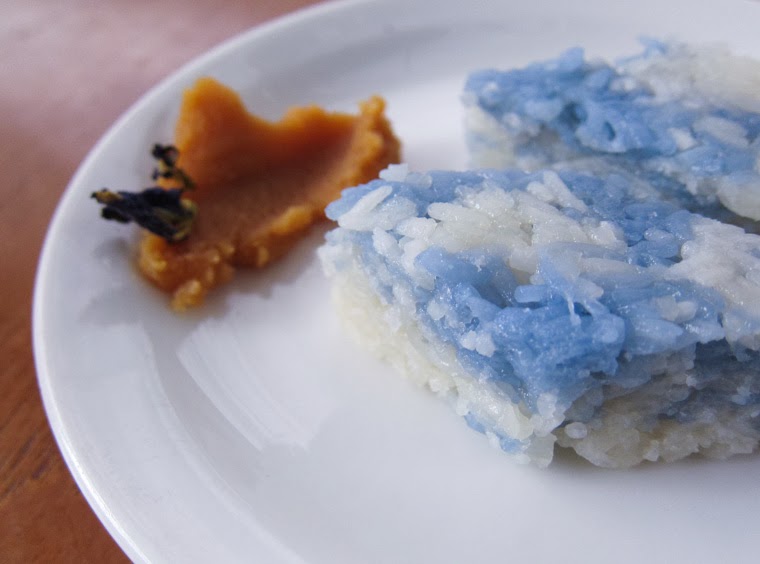
First, these blue glutinous rice cakes, made with steamed glutinous rice, flavoured with coconut milk and coloured with homemade dye from blue butterfly pea flower. Some people call these cakes "pulut tai tai", which, I don't know, translates into "lady rice" or something like that. They are also referred to as "kuih kaya", because they are eaten with generous dabs of kaya, a coconut jam (or perhaps more accurately, caramelized coconut curd). In my family, we know it as "kah tak kueh", which means "foot-stomped cake", as the cooked rice grains are traditionally compressed into cake form by literally stepping on them - I think something like banana leaves are layered over so the feet doesn't come in direct contact with the goods, ha. When my dad makes this, he just presses it with his hands, and weighs it down with heavy books. One day, though, I reckon it would be fun if we tried making it with the old-school technique!

Blue pea flower glutinous rice cakes, served with a dab of kaya garnished with a dried blue pea flower.

There is also this fabulous creation that seems to be a twist on tang yuan (a glutinous rice ball dessert which is traditionally served in a sweet ginger soup) - apparently my parents ate it somewhere and then decided to attempt making it at home themselves. So here we have pumpkin tang yuan in a taro-infused coconut milk. Deliciousness.

Pumpkin tang yuan in taro coconut milk.

My parents are super amazing and they make such a great team, don't you agree? I'll wrap this post up with my best wishes for the days to come. Happy Chinese New Year to my fantastic family, and to all of you!

Click here to read the rest of the post!

Thursday, 12 July 2012

lamb's lettuce (aka corn salad, mache, rapunzel, etc.)...
and a simple stir-fry

an easy lamb's lettuce stir-fry.

Apologies for my long-winded post title, but you would be hard-pressed to find another vegetable suffering from a similarly severe case of identity crisis, and I wanted to cover at least some of its many interesting monikers. Here are the names we use to refer to the pleasantly placid vegetable I'm introducing today, according to Wikipedia:

Corn salad, Lewiston cornsalad, lamb's lettuce, lamb's tongue, fetticus, field salad, mâche, feldsalat, nut lettuce and rapunzel.

I bought it at a vegetable stall at the market where it was labelled as "corn salad", which had me imagining them to be young corn sprouts. But no, apparently this little vegetable used to be harvested from corn fields before the days of commercial cultivation, and that's where it got its name. I've taken a liking to the name "lamb's lettuce", though, because this was charmingly derived from its resemblance to a lamb's tongue, and also because it is purportedly a lamb's favourite food. So from here onwards I'll be referring to it as lamb's lettuce.

lamb's lettuce, aka corn salad, lamb's tongue, fetticus, field salad, mâche, feldsalat, nut lettuce, rapunzel.

To me, lamb's lettuce tastes like a marriage of butter lettuce and baby spinach. It's quite mild when raw, and features often in salads, but I personally think that cooking actually brings out more of the sweetness of the vegetable, even if they do shrink a lot in the heat. Lamb's lettuce cooks fast, too, so you can add it into a soup right at the end, and when stir-fried, as I have done, you shouldn't need more than 20 seconds, and perhaps even less, depending on whether you want to retain a little bit of crunch or if you prefer them completely tender.

So keep an eye out for this little vegetable next time you're at the markets. Or jostle with some lambs for a share when you're next strolling through a corn field.

chilli-garlic lamb's lettuce stir-fry
(yields one very petite side serve)


50g (2oz) lamb's lettuce
1/2 tablespoon peanut oil (or any neutral or nutty oil suitable for frying)
1 small clove garlic, minced
2 - 3 cm (1 inch) red chilli, thinly sliced
1 teaspoon soy sauce
a few drops sesame oil

Thoroughly wash lamb's lettuce, as dirt collects easily in its nooks and crannies. Trim off the roots, if you like - I didn't bother as they were quite tiny. Shake off as much excess water as possible, or use a salad spinner to do the job.
Heat up the oil in a frying pan or wok over a medium heat, and swirl it around. Fry garlic and chilli for about 20 seconds or until softened.
Turn the heat up and add lamb's lettuce. Stir-fry for another 20 seconds or until slightly wilted, bearing in mind that they will continue to cook from the residual warmth of the pan. Remove from heat immediately. Mix in soy sauce and sesame oil. Serve.

This stir-fry recipe can be adapted to suit other vegetables in lieu of lamb's lettuce.
To make this dish gluten-free, use a wheat-free soy sauce.


stir-fried lamb's lettuce.

Click here to read the rest of the post!

Wednesday, 11 April 2012

spicy eggplant fettuccine, a twist on aglio e olio;
aka sichuan meets abruzzo

Spicy eggplant fettuccine, a twist on spaghetti aglio, olio e peperoncino.

One of the first meals I learnt how to make from a cookbook was spaghetti aglio e olio.

I was eighteen when I left Malaysia to pursue a university degree in Australia. My sister and I rented a unit together. Our repertoire of dishes was limited back then, and truth be told, my knowledge of Western cuisine didn't go much beyond a simple grilled salmon with salt and lemon, and - shock, horror - assorted meals composed from packet mixes and jarred sauces from the supermarket shelves. (Mind you, they weren't all bad!)

But one day, my sister received a cookbook from my aunt - one that, in retrospect, encouraged our first baby steps in Western cooking. When I flipped through the pages, it was an easy pasta recipe that caught my eye. Spaghetti aglio, olio e peperoncino. Ingredients: spaghetti, olive oil, garlic, chilli, salt and pepper.

Enticed by its simplicity, I made my first spaghetti aglio e olio. It was a revelation in the strength and beauty of basic ingredients, and I've made it many times since.

Eggplants from my aunt's garden, sliced, in a bath of lightly salted water.

Now, many years later, I rarely rely on cookbooks, and most of my meals are either the tried-and-true, or on-a-whim creations. Today's recipe is a blend of both. That old Italian favourite, given a new twist with classic ingredients from my Chinese upbringing... a hot and tingling eggplant fettucine, where Sichuan meets Abruzzo.

The use of peanut oil gives this a heavier character than olive oil in the original aglio e olio recipe, but also a fragrant nutty quality. The skin of the eggplants crunch up a little when fried, while the flesh almost liquefies. The pungence of the garlic, paired with the numbing heat of the peppercorns and chillies, keeps the tastebuds on the edge. I threw in the garlic chives almost as an afterthought - I have the plant growing in a pot on my windowsill these days, courtesy of my parents from their most recent visit - and they turned out to be the perfect crowning touch of piquant green goodness.

So here you have it, my playful translation of West to East.

Dried Sichuan peppercorns and chillies.

sichuan-inspired spicy eggplant pasta (serves 1)

2 tablespoons peanut oil
2 cloves garlic, minced
1 teaspoon Sichuan peppercorns
4 dried chillies, chopped
1/4 teaspoon salt
1 serve of pasta (approx. 200g fresh or 125g dried. I recommend fettuccine, linguine, or spaghetti)
4 baby eggplants (approx. 200g)
2 tablespoons chopped garlic chives
Chinese light soy sauce, roasted sesame oil and black vinegar, to taste

Warm up the peanut oil over low heat. Add garlic, Sichuan peppercorns and dried chillies. Gently fry, taking care that they do not burn, for 2 minutes or until the oil takes on a rosy hue, and before the ingredients turn black. Stir in the salt, set aside to cool slightly, then strain.

Slice eggplants lengthwise into quarters, soaking them in lightly salted water as you do so to keep them bright and fresh. Retrieve and squeeze out excess water before frying.

Boil your pasta in a pot of salted water according to packet or vendor instructions until al dente. (Times will vary depending on whether you are using fresh or dried pasta.) When the pasta is cooked, drain in a colander (but reserve a little of the pasta water).

While you are waiting for the pasta to cook, return the spicy infused oil to a pan over high heat. When the oil is hot, throw in the eggplant strips and let them fry for 1 minute, then turn them and fry for another minute. Retrieve eggplant and set aside so that it does not continue to soak in the oil.

Toss together the cooked pasta, eggplant, infused oil and fresh garlic chives. Add Chinese light soy sauce, roasted sesame oil, and black vinegar to taste, if desired. If the mixture is too dry, add a little of the reserved pasta water to loosen it up.

Tuck in and bask in its greasy glory. A refreshing salad on the side wouldn't go astray!

Notes/Variations:
To make this dish vegan, make sure you use an eggless pasta.
To make this dish gluten-free, use gluten-free pasta or rice noodles.


Spicy eggplant fettucine - when Sichuan meets Abruzzo.

Click here to read the rest of the post!

Sunday, 19 February 2012

peking duck dreaming: dadong, beijing

DaDong's roast duck. Skin so crispy, it shatters...

It was a cold spring evening in Beijing. Simon and I had just arrived at DaDong, the esteemed restaurant chain that I believed could hold the key to the Peking Duck of my dreams.

I knew Peking duck in Beijing was a must-have, and I did my research prior to our trip to China.

There's the old-school chain, Bianyifang, established in 1416. There's the longstanding stalwart, Quanjude, established in 1864. And then there's DaDong, a relative newcomer from 1985.

Simon isn't quite as fascinated by food as I am, and moreover I knew a comprehensive duckfest in Beijing was not easily achievable on our schedule. Out of the many Peking duck restaurants in Beijing, I found DaDong to be the most promising. It garnered high scores from the aggregate restaurant review sites in China. Happy customers cited the roast duck at DaDong to be lighter and crisper than their rivals. Hell, Heston Blumenthal visited DaDong in his quest for the perfect Peking duck. If we could only fit in one restaurant for Peking duck, surely it had to be DaDong.

Still, once we landed in Beijing, I decided to pester the locals for their opinions, my curiosity unsatiated. The taxi driver who took us to our hotel from the airport was the most knowledgeable, having had his duck at all the major players on the scene. "DaDong," he responded without hesitation when I posed the question. The roast duck at DaDong had all the flavour with half the grease, he said, and it was the clear winner for him. So that was that.

And here we were, finally.

The DaDong restaurant building.

We entered the restaurant. It was a Thursday night, and the reception foyer was busy with punters. We had neglected to make reservations, so a girl gave us a number and told us to wait for our turn. We found empty seats and sat down.

I gazed into the clear glass that separated us from the kitchen and looked upon the staff going about the preparation of the ducks. Ducks that glistened, mirroring the angry flames rising from the burning firewood. Ducks hanging and resting off stainless steel bars. A man in chef's whites deftly slashed one of the cooked ducks, and the juices came gushing out with reckless abandon. I rummaged in my bag for my little point-and-shoot camera, but the battery was dying. I asked Simon if he could help me out with his DSLR, and he obliged. Disaster averted.

Teasing the flames, tending to the ducks...

We watched and we waited. Twenty minutes later, our number was called.

The menu at DaDong was a work of art - I wish I had asked Simon to take photos. It was a large, heavy book, filled with stunningly styled pictures of their extensive options. DaDong, it turned out, wasn't just about the duck. They have a vast range of dishes, ranging from traditional favourites to the modern exhibits of molecular gastronomy. One memorable option was styled in the impression of a winter's scene: a wash of snow-white flecks raining upon elegantly sculpted morsels on slate-gray stone.

We bypassed the numerous temptations with some reluctance, and proceeded to order Peking duck, half a bird's worth, and a pot of tea.

A chef prepared the duck by our table with nimble precision. Only the top surface area - the skin, along with a slim sliver of the flesh underneath - the crème de la crème, if you will - was sliced onto the plate for us. He then left, taking the rest of the carcass with him, which still had substantial amounts of meat on it. Apparently we could've requested to take the remains home, or, in our case, back to our hotel, but we didn't know it at the time.

Roast duck at DaDong. Now that's what I'm talking about.

The skin of the duck was delicately crunchy, the flesh gentle and juicy. Gleaming with translucence, it crackled and dissolved in our mouths without the excessive oil slick that all too often comes with the territory. Yes, it was refined. It was magnificent.

The duck had two platforms on which to shine: sweet, crisp sesame buns that were scrumptious enough to eat on their own, or the more traditional thin pancakes, ethereal yet not too fragile. Both were superb.

An array of condiments to raise the Peking duck dish to another level of lusciousness.

The condiments for dressing the duck were a joyful collage of sweet bean sauce, cucumber, leek, radish, garlic paste, pickled/preserved vegetables, and even white sugar - a surprising inclusion that just made so much sense, in the same glorious way that honey-baked ham and maple-candied bacon makes sense.

We finished every crumb on our plates, then pored over the menu again - for dessert, naturally.

Digging into the candy apples.

Simon and I concurred on the hawthorne sorbet, which we felt would be a refreshing end to the dinner, but it was sold out. We settled for the award-winning deep-fried apple fritters with spun sugar. The waitress brought it to our table, and dunked the apple fritters quickly in and out of a bowl of iced water, solidifying the syrupy exterior into a crunchy coating with slender thread effects.

Look ma, no face!

Though we opted for a small serve, it was perhaps still a little too generous for the two of us. Perfectly brittle on the outside, hot and tender on the inside, I popped the first few fritters down with enthusiasm - but make no mistake, this is quite a heavy dessert, and with only some complimentary fresh fruit to lighten it up, we both struggled to finish it by the end.

The bill was not too daunting at all. The Australian dollar was strong at the time, and our simple meal came well shy of AUD$20 per person.

So was that the best Peking duck in the world? I don't know. But it was certainly the best Peking duck I've ever had. I only regret there wasn't a second visit to DaDong, and I wished, too, that we could've made the time to visit at least one of their rivals on the Peking duck scene. But I am content. When I hark back on this experience - perhaps with the rosy hue of travel nostalgia, yes - it had an almost magical quality to it.

It would be greedy to ask for more.


Visited:
24th March 2011

Address:
Da Dong Roast Duck (Nanxincang Branch)
1-2F, Nanxincang International Plaza,
22A Dongsishitiao, Dongcheng District,
Beijing 100007, China.

Website:
(Check out their seriously amazing food styling and photography!)
http://dadongdadong.com/en/index.html?lang=1


Click here to read the rest of the post!

Wednesday, 18 January 2012

lemon-pepper soy-ginger lamb heart stir-fry

Stir-fried lamb's heart (plus capsicum and spring onions) with lemon, pepper, ginger and soy.

As an omnivore who often enjoys vegan and vegetarian meals, but still loves the taste of meat too much to give it up, I like using the parts of animal that are often neglected and could otherwise go to waste. The following story and accompanying images contains content that may be off-putting to those who are not comfortable with offal.

However, if you are interested in trying it out, I am of the opinion that heart is a good starting point. The taste is quite gentle, and the texture is conventional enough - some may even prefer it to meat. I've had chicken heart before, which I found to be quite delicious. This is my first experience with lamb heart, and I feel equally positive about it. Lamb heart, when raw, has a fairly rich, fleshy scent. When cooked, it has a pleasantly mild taste of lamb and a tender texture. Other than a stir-fry like this, I can also see myself throwing it into a pho or a curry laksa!

And for those of you who already embrace offal - enjoy!


A lamb heart story:

Girl goes to Victoria Market with parents, uncle and aunt.
Girl meets lamb hearts (only 80 cents each!), is intrigued at first sight.
Girl points out the lamb hearts to mum, who regards them with unconcealed disgust.
Girl points out the lamb hearts to dad, who is as curious as girl and encourages her to buy a couple.
Girl purchases lamb hearts.
Girl gets home and decides to stir-fry one lamb heart for dinner.
Girl's mum helps by preparing the lamb heart - trimming off the fat and tubes; cutting the glistening dark meat into thin slices.
Girl marinates lamb heart in lemon, ginger, soy sauce and black pepper, then stir-fries it in a wok with capsicum and spring onion.
Girl serves up lamb heart stir-fry for dinner, enjoys it with dad as the rest of the table keeps their distance.

Ah, lamb hearts. Certainly a far cry from the cutesy valentiney love hearts we see...

The cross section of the lamb heart. Sorry, it's not really getting more attractive is it?

Lamb heart, all sliced up and swaddled in marinade. Hey, it's not looking too bad now...

lemon-pepper soy-ginger lamb heart stir-fry

1 lamb's heart
1 teaspoon lemon juice
1 tablespoon soy sauce
2cm / 1 inch ginger, cut into thin strips
1/4 teaspoon freshly cracked black pepper
1 small capsicum (bell pepper), cut into strips
2 stalks spring onion (scallions), chopped into sections
oil, for frying

First, prepare the lamb heart. Cut off any vessels, valves, tubes and the like. Trim away excess fat (that would be the white bits on the outside). Basically, you want get it down to that meaty-looking maroon part of the lamb heart, which you then slice into strips.

Create a marinade by mixing together lemon juice, soy sauce, ginger and black pepper in a bowl. Toss the lamb heart in and mix well, then cover and keep in the fridge for an hour.

Heat up some oil (half a tablespoon should do) in a wok or pan over a medium high heat, then stir-fry the lamb heart until the pieces start to change colour. This could take less than a minute, depending on their thickness. Lamb heart gets tougher when it's overcooked, so try not to dilly-dally.

Add in the capsicum and spring onion and stir-fry for another 20 seconds. Taste and add more seasonings if desired. Transfer to a plate and serve immediately with steamed rice.

The result: a not-that-scary and rather scrumptious offal dish: lemon-pepper soy-ginger lamb heart stir-fry.

Click here to read the rest of the post!