Pages

Wednesday, 21 May 2014

sauraha and chitwan national park: surreal charm

An elephant and its friendly mahout (rider/trainer).

Being in Sauraha is a surreal experience.

We get off the bus and we're whisked off on the back of a truck to our accommodation, Crocodile Safari Lodge and Camp. Along the way, I see not only elephant dung paper shops, but also a sign and stall for an "Emergency Elephant Booking Counter". Because, as we all know, sometimes you just urgently require an elephant.

Then as you get closer to the periphery of Chitwan National Park, you do begin to see elephants everywhere. They're on the road with their riders, sharing the road with cars, motorcycles, and pedestrians. After a while, it just starts to become totally expected and normal. But still awesome.

We launched our adventures at Chitwan National Park with a canoe safari. It was a peaceful event being out on a boat in the early morning, the water gently lapping, with our guide identifying the variety of different birds and the spotting of crocodiles every now and then - including the unique gharial with its elongated, narrow snout.

A crocodile sunning itself.

After the canoe safari, we went for a full-day jungle walk safari, and this is where it gets freaky.

Firstly, we were briefed by our guide on what to do if we encounter any potentially dangerous animals. If you see a tiger, that is a rare occurrence as they're apparently quite shy of humans, but should it happen, you are to maintain eye contact and back away slowly. If a rhinoceros charges, you have a few options. If you can, climb the nearest tree. Otherwise, hide behind it. If there are no trees, run in a zigzag manner, and throw something (e.g. a cap, jacket or whatever) as a red herring, for the rhino has poor eyesight, and this will confuse them. If you chance on a sloth bear, stand together with your group and try to be as intimidating as possible. The sloth bear is considered to be one of the most feared animals, as unlike most other animals, it is actively aggressive towards humans, often going for the face with its teeth and claws, in some cases even tearing it right off.

Right. Anyway.

I began to think that, perhaps, seeing wildlife on a safari was totally overrated and unnecessary.

Our walk started on footpaths flanked by savannah grasslands. It may not be obvious from the picture, but those grasses can grow to towering heights, so we don't venture into them. We once heard a rustling and our guide investigated - it was a rhino. We never saw it ourselves, but stayed still in the shadows of the trail until the sounds were gone.

The mystical savannah.

We then went into the jungle, and one of the first things we saw was the skull of a sambar deer, just casually sitting there. The guide says it was likely the victim of a tiger. Later, Simon tells me that he cynically reckons that it was planted for the benefit of tourists like us.

A sambar deer skull on the forest floor.

At this point we hadn't seen very much, though we would occasionally spot assorted varieties of animal excrement. It was a hot day, we were tired, and we wondered if we would see anything worthwhile.

And then...

We stumbled upon the Greater One-horned Rhinoceros.

We had just emerged from trees and bushes to a clear area, and there it was, right there, drinking from a waterhole.

There is just nothing like spotting a wild, majestic animal when you're on foot, vulnerable and completely aware of the precariousness of the situation. Adrenaline rushing, heart thumping, we slowly, quietly crouched down as silently indicated by our guide. And there we stayed, looking right at the rhino, and he looks at us.

We see a rhino, and it sees us.

Our guide quietly told us that we can take photos. I was slightly frozen at that stage, but this gave me the confidence I needed to pick up my camera. We took a few snaps, and there seemed to be a mutual understanding that we all come in peace. The rhino eventually left. I had already picked out the tree I was going to climb, but oh well. Our guide suggested we have a picnic and observe if any other animals visit the waterhole. So there we were, incompetently eating fried rice with our hands because no utensils were packed, softly discussing what just happened. "How far do you think that rhino was from us?" I asked, and answered my own question: "I reckon it was about 10 to 15 Michael Jordans away, so 20 to 30 metres." Simon thought that was a hilarious way to measure things, but whatever. I find it extremely useful.

The rhino departs.

So, the jungle walk turned out pretty awesome after all. Oh, and amongst other things, we also saw a peacock waddling quickly away from us at one point, into the grassland, closely followed by a chicken (a wild one, i.e. a junglefowl). It's like they are best friends. That was almost as cool as seeing a rhino.

We were so incredibly exhausted from walking for about 6 hours in 35°C heat (95°F), that we just plonked ourselves down in our 5-dollar-a-night lodge the moment we got back, turned the fan on to full blast, and downed a big bottle of cold Fanta between us.

The next day, we were still not quite fully recharged, so we took it easy with casual strolls around Sauraha.

We saw chickens...

Hello, chickens.

And oxen...

Hello, oxen.

A horse-drawn cart...

Hello, horse.

And a dog on a roof.

Hello, dog on roof.

Also, marijuana plants grow everywhere around here. And when I say everywhere, I mean EVERYWHERE. It's in everyone's backyards. By the roadside. Outside our window. Like the whole elephant state of affairs, it felt surreal at first, but we merrily adapted to it as another fact of life in Sauraha.

Oh... hello, Mary Jane!

Don't think I've forgotten about the food. This is a food blog, after all.

Our first meal in Sauraha was at Sweet Memory Restaurant (not to be confused with the Sweet Memories Restaurant we ate at in Pokhara, they love that name around here don't they?). The food was quite nice.

Simon had a vegetarian burger.

Vegetarian burger at Sweet Memory Restaurant in Sauraha.

I opted for a pleasantly spicy egg curry.

Egg curry at Sweet Memory Restaurant.

We subsequently discovered Jalapeno Restaurant and Bar.

Their deep-fried buffalo momos are tasty - there is a rich meatiness that is assertive without being overwhelming.

Deep-fried buffalo momos.

But it was this vegetarian dish that Simon absolutely fell in love with - Bhatmas Sadeko, a local snack. Crunchy pan-fried soybeans are tossed together with green chilli, garlic, ginger, shallot, spring onion, tomato, lime, coriander. It was quite the flavour explosion. We came back and ordered it again the very next day.

Bhatmas Sadeko.

Then we're back to doing safaris!

After a good rest, we were up for another trip, this time going even deeper into Chitwan National Park with a full-day jeep safari.

The view from the jeep.

We were, unsurprisingly, able to cover a lot more ground with a jeep than we did on foot, so we saw many more animals as well - deer, bison, monkeys, and various birds, including a gorgeous Greater Racket-Tailed Drongo and also - I think - an Asian Paradise Flycatcher. Unfortunately I didn't get many good pictures of these sightings. Plus, I was mostly using Simon's camera, which I don't have access to at the moment, with our latest interstate romance and all.

But, I did get more rhino pictures!

This mother rhino and her child had been moving through the grassland. Our guides tapped the jeep to indicate our driver to stop. One of them whispered, "I think they're going to try to cross the road." So we waited, and we waited. And finally, mama rhino emerged in her full glory.

Mother rhino starts to cross the jeep tracks.

Moments later, the baby comes into view too. They were quite alert of us, and seemed slightly hesitant. Eventually, mama rhino crossed to the other side, and the cutest thing happened - baby rhino looked uncertainly in our direction, then quickly ran off after his mother, his little armoured butt wagging, as if to say, "Oi, mum, wait for me!" Ahhhhhh. Too adorable.

Mama rhino with her baby rhino.

There are so many peacocks in Chitwan National Park. At one point our guides saw another peacock-chicken duo, and I was a little sad that I missed out on that sighting - gotta love endearing pair-ups. But anyway, here is a peacock, chilling out on a tree branch.

Spot the peacock sitting in a tree.

On our final night, we had an impromptu jamming session with the local guys at our lodge, which included a Nepali rendition of Knockin' On Heaven's Door. It was an exhilarating conclusion to an eye-opening few days at Sauraha, and we are grateful for all the wonderful things we experienced here... and that we came out alive, of course.

Bye bye, Sauraha and Chitwan National Park.

Click here to read the rest of the post!

Friday, 16 May 2014

astam, the beautiful nepali village

A bundle of firewood amidst spring blossoms, and snow-capped peaks in the distance.

I don't know where, or how, to start with our experience in Astam, the beautiful little village in Nepal.

But let's start with the accommodation, and all the wholesome things we consumed while we were there.

We stayed at the Annapurna Eco-village, a sweet, sustainable family-run mountain resort. They have a gorgeous garden full of edibles, and they make their food and drinks from scratch. I only wish we stayed longer, so I could participate in activities such as milking cows, churning butter and grinding flour.

Fresh chamomile flowers in the garden.

We had fresh tea everyday.

Tea made from chamomile and lemongrass from the garden.

And delicious breakfasts...

Breakfast plate with eggs, potatoes and crepes.

This porridge, made with local grains, had an intriguing colour and a gentle, nutty flavour.

Local porridge - made from local grains.

When we ordered muesli with curd, we were told that there was no guarantee that their curd would turn out right, because such things can be fickle, and would we be okay with yoghurt instead if it didn't pan out? Yes, we said. I am happy to report that their curd recipe did not let them down.

Muesli with curd.

I don't generally tend to order porridge, but this banana porridge was so smooth and perfectly sweetened, it was addictive.

Banana porridge.

I also tried the fresh cow's milk. They don't tamper with it, other than warming the milk slowly over a fire to make it safe to drink.

I observed them pasteurizing the milk one evening.

And here it is, a minimally processed milk that still retains a rich complexity and character.

Fresh cow's milk.

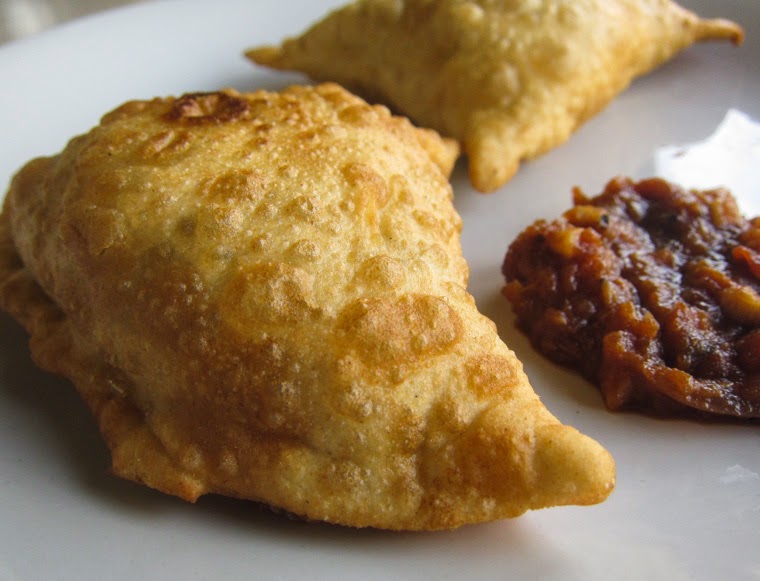
We snacked on samosas, too.

Samosas.

They were the freshest, lightest, healthiest samosas I've ever had. I mean, check out that samosa filling.

The cross-section of the samosa.

We also enjoyed the noodle dishes...

Stir-fried noodles with egg and cheese.

This soupy vegetable one is called Thukpa. The handmade noodles were a delight.

Thukpa, a Nepali noodle soup.

And their vegetarian curry was rather tasty, as well.

Vegetarian curry.

Of course, we had the national dish here. Dal Bhat Tarkari - lentil soup with rice, vegetable curry, and pickles.

Dal (lentils), of the Dal Bhat Tarkari.

Very nice.

The rest of the Dal Bhat Tarkari.

We also tried this traditional dish called Didhu. Funnily enough, when we ordered it, we were practically dissuaded from doing so. Foreigners don't tend to like this dish, they said. We said we'd try it anyway. More hesitance. More back and forth. Finally, okay, they said, we'll try to make it more delicious for you.

Didhu seems to be pretty much the same thing as Dal Bhat Tarkari, but instead of rice, there is this almost elastic lump of paste instead, which is made from ground local grains. This is best eaten using your hands. We were instructed to dip our fingers into the lentil soup, pinch off a bit of the paste, dip that in the lentil soup again, then put it in our mouths and try to swallow it without chewing. We were perplexed. Why shouldn't we chew? We didn't quite understand their explanation, but it seems that it may have something to do with that stuff being really hard to clean if it gets in between your teeth. We may have cheated a little, it was just too difficult to eat without chewing!

And, while it was an acquired taste, I thought it was fine, and Simon actually seemed quite into it. We did share it, though, and I think that little mountain of dhidu would probably have been more daunting, in its starchy, stodgy manner, if one person had to finish it all.

Didhu / Didho / Dhindo. Like Dal Bhat Tarkari, but with a maize-buckwheat paste instead of rice.

But it's not all just about the lovely resort and the nourishing food. There is so much more.

Morning meditations.

Everyday, we woke up early in the morning and went for leisurely walks that were filled with happiness.

Fields of green wheat... or is it barley?

It was here that I first became familiar with the sight of mustard plants. Once those pods ripen, simply pick them open, and voila, you have fresh mustard seeds. In Nepal, they like to infuse it in oil.

Fields of mustard.

I had no idea what these were, but I think I've now identified them as oat plants!

Fields of oats.

We breathed in the fresh mountain air. We feasted our eyes on verdant springtime scenery. We went up, down and around hilly paths with villagers, dogs and goats.

Adorable baby goat.

We made friends with a few of the villagers, and everyday they invited us to sit on their front porch for conversation, snacks and fun. We learned about each other, we ate together, we danced together, and we laughed together.

A village snack of crunchy lentils or beans with lemony sugar. I think they call it something like "portu".

We were sad when we had to say goodbye. You will not forget? They asked. And they said, we will miss you. Of course we will remember, we said, of course we will miss you too.

And I do miss them already.

Oh, to be back in Astam again...

Life in Astam, the beautiful Nepali village.

Click here to read the rest of the post!

Sunday, 11 May 2014

pokhara: lassis and momos, boats and fishes

Phewa Lake / Lakeside Pokhara.

I have a confession to make: We didn't really do much in Pokhara. Mostly, we ate. And walked around. And ate some more. But that's a good confession for a food blog, right?

The bus ride from Kathmandu to Pokhara took about 7 hours. Google lies and says it's just over 4 hours, but Google clearly isn't familiar with how roads and traffic operate in Nepal. Narrow roads in various states of maintenance winding through mountainous regions do not make for a quick drive, I can tell you that.

A cow in the middle of the street, amidst traffic, in Pokhara.

Understandably, when we arrived in Pokhara, a refreshing drink was in order. And there were plenty of those on offer.

This menu at a juice and lassi shack caught our eye. It may look extensive, but not all items were available as they are restricted to what's in season. Which is a good thing, since it means whatever you get is the fresh stuff. We ordered a watermelon juice and an apple lassi.

An extensive list of drinks.

We also adopted a couple of restaurants here as our local haunts. Old Star Family Restaurant was one of them. The prices here are very reasonable - it's easy to grab a main and a drink here for just around 200 NPR (~$2.3 AUD) if you order the cheaper items on the menu, though on our less frugal days it's also easy to spend twice that. I think this is also where we first learned the Nepali word, "mitho", which means "delicious" - a very appropriate term for all the things we ate here!

This is a delectable cardamom lassi - I think it had banana and honey in it, too.

Cardamom lassi.

The national dish of Nepal is Dal Bhat Tarkari - lentil soup, rice, and vegetable curry, sometimes with pickles as well.

Dal Bhat Tarkari - Nepal's national dish.

This is the Dal - the lentil soup that is served on the side.

Dal.

We also had momos (Nepali dumplings), which come with a nice buttery spicy sauce. These are steamed chicken momos - they were freshly made, and so tasty. The restaurant seems to make everything to order with no shortcuts - soon after we tell them what we want, we would often see them picking herbs from the garden, and hear them chopping up vegetables in the kitchen. It can take a long time, but we were never in a hurry, so we didn't mind waiting.

Steamed chicken momos.

The breakfast items are good, too. This is the masala omelette, which is basically an omelette with mixed spices and vegetables.

Masala omelette.

One time I was craving something sweet and indulgent, so I went for something from the Western section of the menu - French toast with honey. It was simple, well done and hit the spot.

French toast with honey.

Another spot we frequented was Sweet Memories Restaurant. We were initially attracted to their free wi-fi, and also their fantastically spicy chai (though it wasn't as fantastically spicy on subsequent visits, sad face).

Due to the bountiful lakes, Pokhara is one of the places in Nepal where one can take the opportunity to tuck into some freshwater fish, and that we did. This deep-fried fish was not what I expected - it was like a fish schnitzel! - but very scrumptious.

Deep fried fish. It's like a fish schnitzel.

The fish cooked Nepali-style was also superb. It came on a sizzling plate, with a complex spicy sauce. I think these fish dishes ring in at just over 400 NPR each (~$4.6 AUD), plus taxes (some restaurants include taxes in their menu prices, others add them on afterwards).

Fish cooked with a spicy Nepali sauce.

One day we ventured out of the main tourist area, and after wandering around aimlessly for a while, found ourselves longingly looking at samosas and pakoras on display in a dingy little shop. So in we went. We enjoyed them so much we took our plate back to the lady for a second helping. They were a bargain - the samosas cost 15 NPR (~$0.18 AUD) each, while the pakoras were 5 NPR (~$0.06 AUD) each.

Samosa and pakora.

As you can see, we had a very appetizing time in Pokhara! In my next post, I'll show you around Astam, a nearby little village with breathtaking views. Till then, stay cool.

A cat chillin' out in Pokhara.

Click here to read the rest of the post!